Awareness
Notice feelings, thoughts, and familiar reactions before moving straight into action.
The Inner Child Practice
You do not have to understand everything about your past at once. The Inner Child Practice offers grounded books, reflections, and practical exercises designed to help you notice recurring emotional patterns, respond to yourself with greater compassion, and build a steadier relationship with yourself one small practice at a time.
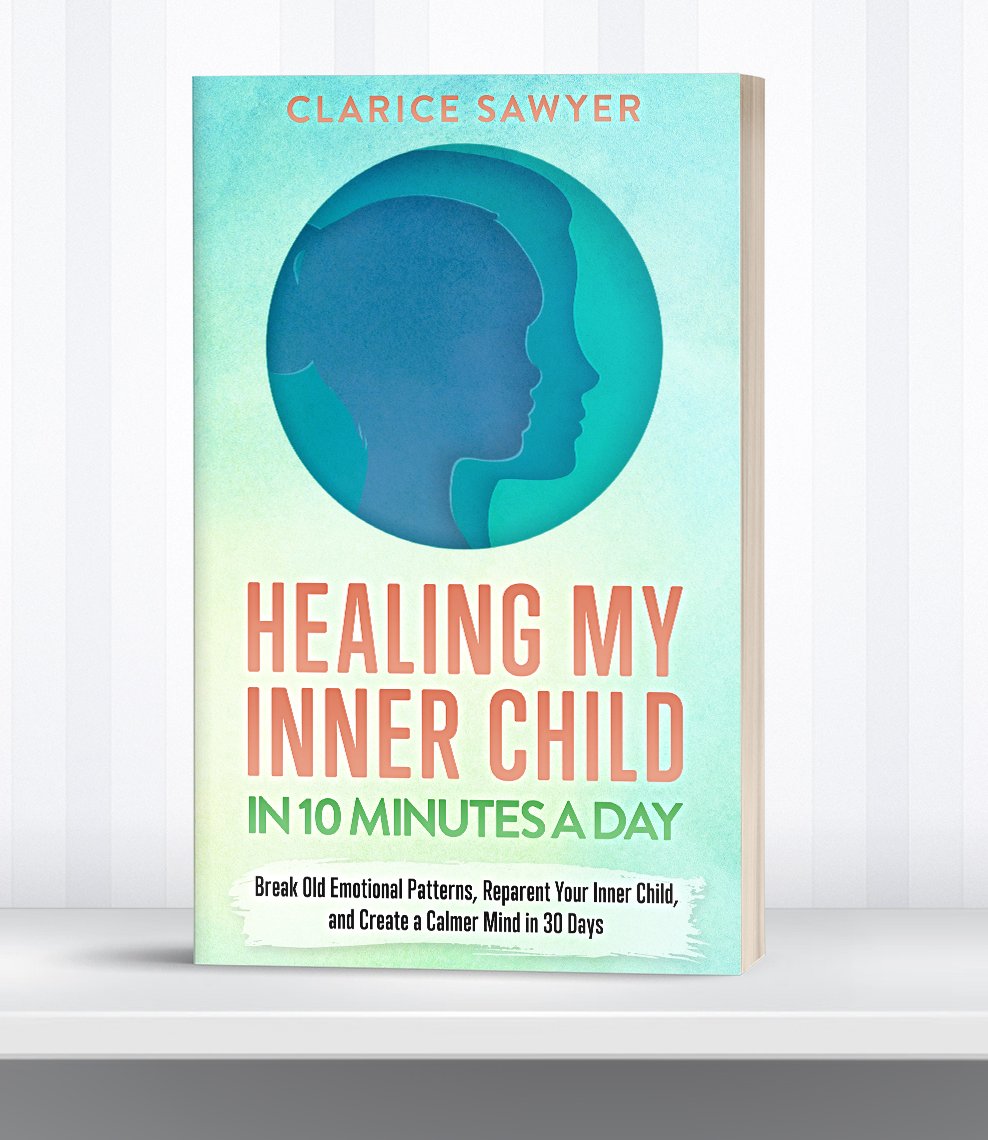
10 minutes a day A grounded 30-day practice by Clarice Sawyer
A manageable way to begin
Inner-child work can begin with a pause, a kind question, or a boundary you practise one small step at a time.
Rather than asking you to uncover or resolve everything at once, this approach makes room for short, repeatable moments of awareness. Over time, those moments can help you recognise what you feel, understand what you need, and choose a response that feels more grounded and supportive.
Go at a pace that feels manageable. A useful practice can be quiet, ordinary, and brief.
Patterns you may recognise
You might notice certain responses appearing again and again, especially when you feel uncertain, criticised, overlooked, or under pressure.
These experiences can have many causes. Recognising one or more of them does not, by itself, prove childhood trauma or indicate any diagnosis. The invitation is simply to notice your experience without judgement.
What the practice focuses on
Each area offers a practical lens for meeting difficult moments with more steadiness and choice.
Notice feelings, thoughts, and familiar reactions before moving straight into action.
Return attention to the present through simple cues of steadiness and support.
Respond to struggle with warmth and honesty instead of criticism or shame.
Practise offering yourself the reassurance, care, and guidance you need now.
Recognise your limits and communicate them with increasing clarity and respect.
Create a little more space between a strong feeling and the response that follows.
Carry small insights into daily life through repetition, reflection, and patience.
A practice, not a quick fix
A 30-day horizon can make it easier to begin, stay curious, and return to the practice. It does not guarantee that every past experience or emotional pattern will be resolved.
About the author
Your next small step
Begin with a practical 30-day structure, or visit the companion resource page for reader materials and a gentle practice you can use today.